


Quick links
Trip Inquiry
Our travel experts are ready to customize and plan your next journey, trek, tour or rafting. Contact us by phone or message.


Indra Jatra, one of the biggest and most vibrant festivals in the Kathmandu Valley, is a
spectacular blend of ancient myths and elaborate rituals. This eight-day festival marks
the end of the monsoon season and pays homage to Indra, the King of Heaven and the
deity of rain. It is a time for the Newar community to celebrate and pray for a bountiful
harvest.
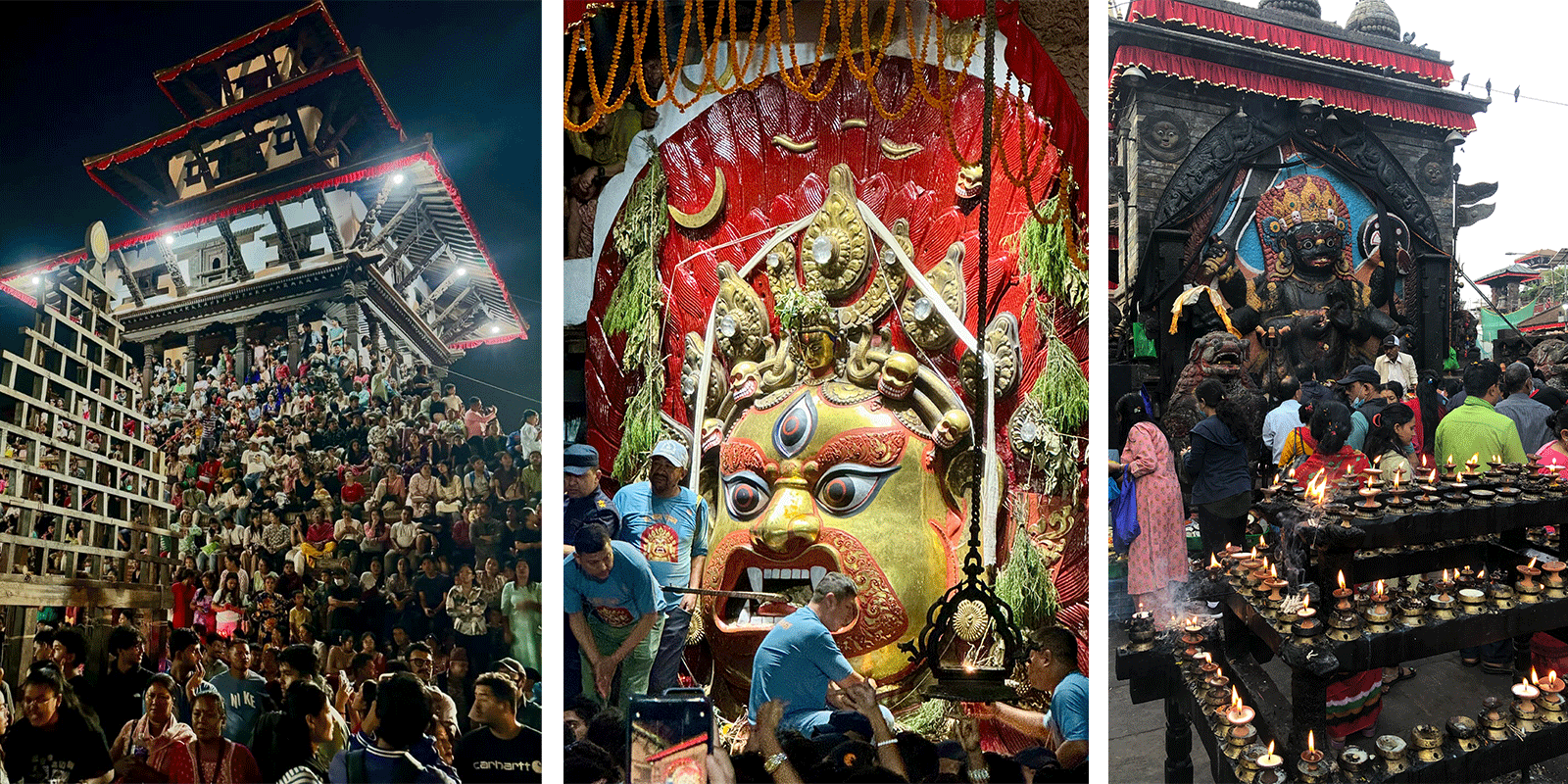
The festival officially begins with the raising of a long wooden pole, known as Yosin Than, in Kathmandu’s Durbar Square. A central part of the celebration is the rich mythology behind it. According to the legend, Indra’s mother, Dagini, needed a special flower, Parijat, which was not available in heaven. Indra, disguised as a commoner, came down to Kathmandu to steal it. He was caught and imprisoned by the valley people, who didn’t recognize him. When Dagini came looking for her son, the people were horrified to learn of their mistake. They immediately released Indra and dedicated this grand festival to him to appease his anger and honor his divine status.
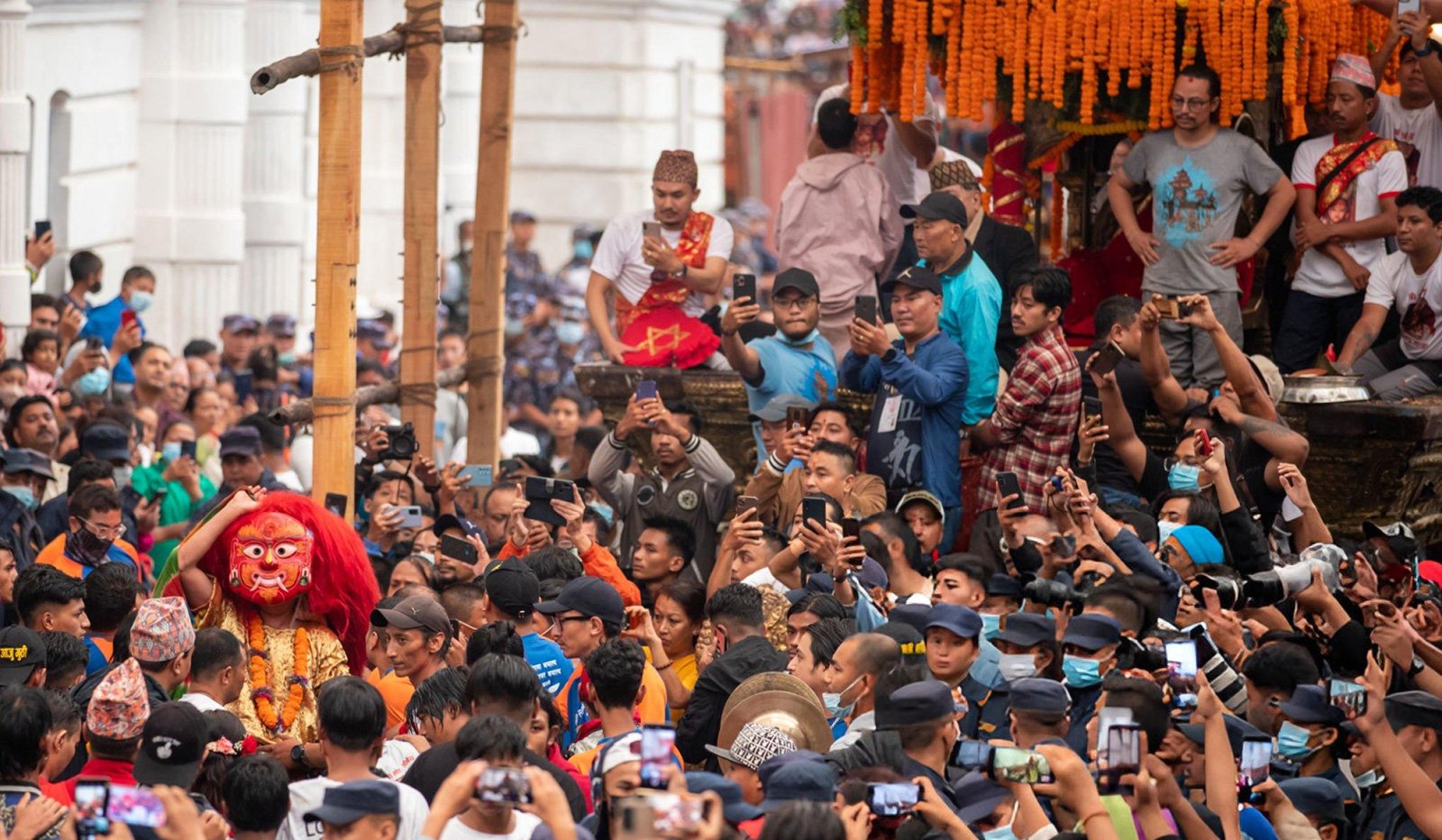
The highlight of the festival is the majestic chariot procession. On the main day, three magnificent chariots carrying the living deities of the Kathmandu Valley—Lord Ganesh, Lord Bhairab and the Living Goddess Kumari—are pulled through the narrow, ancient streets. The procession is a sight to behold, with thousands of devotees lining the streets to receive blessings. Masked dancers representing deities like Lakhe and the giant face of Swet Bhairab also perform, adding to the festive atmosphere. Indra Jatra is not just a mythological reenactment; it is a profound cultural event. It brings the community together in a celebration of shared heritage, faith and gratitude for the year’s rains. The festival concludes with the lowering of the ceremonial pole, symbolizing the end of the monsoon and the start of a new, prosperous season.
The festival officially begins with the raising of a long wooden pole, known as Yosin Than, in Kathmandu’s Durbar Square. A central part of the celebration is the rich mythology behind it. According to the legend, Indra’s mother, Dagini, needed a special flower, Parijat, which was not available in heaven. Indra, disguised as a commoner, came down to Kathmandu to steal it. He was caught and imprisoned by the valley people, who didn’t recognize him. When Dagini came looking for her son, the people were horrified to learn of their mistake. They immediately released Indra and dedicated this grand festival to him to appease his anger and honor his divine status.
The highlight of the festival is the majestic chariot procession. On the main day, three magnificent chariots carrying the living deities of the Kathmandu Valley—Lord Ganesh, Lord Bhairab and the Living Goddess Kumari—are pulled through the narrow, ancient streets. The procession is a sight to behold, with thousands of devotees lining the streets to receive blessings. Masked dancers representing deities like Lakhe and the giant face of Swet Bhairab also perform, adding to the festive atmosphere. Indra Jatra is not just a mythological reenactment; it is a profound cultural event. It brings the community together in a celebration of shared heritage, faith and gratitude for the year’s rains. The festival concludes with the lowering of the ceremonial pole, symbolizing the end of the monsoon and the start of a new, prosperous season.